
Looking for a quote or to discuss your needs?
You can also review the documentation for technical details and purchasing information.
CT110 Cooling Tower Controller
- Product Details
- Specifications
- Installation
- Operation
CHEMTROL® CT110 Cooling Tower Controller
Automatic bleed and chemical feed for one cooling tower
The CHEMTROL® CT110 keeps cooling tower water within its conductivity (TDS) limit by bleeding automatically, and runs up to three chemical feeds – inhibitors, biocides and dispersants – to prevent scale, corrosion and biological growth.
ORP control comes as standard: the tower is disinfected with chlorine or bromine, and ORP keeps the dose where it should be, without overdosing.
For bromine-treated towers, CHEMTROL® controllers can also control on the free bromine level itself, in ppm, with an optional free bromine ppm sensor.
It also monitors water temperature and make-up and bleed water, calculates the Langelier Saturation Index for water balance and logs its readings automatically. Add pH control – chosen with more than 70% of our controllers – corrosion monitoring or fluorometer measurement as your treatment program needs them, and remote monitoring to see and adjust it from your computer or phone.
Why automate?
Good water treatment keeps a cooling tower efficient and its equipment long-lived. The CT110 takes the daily balancing off your hands: less chemical and water wasted, fewer manual checks and fewer surprises.
Compare the Models
| CHEMTROL® Selection / Features | Cooling tower controllers | Boiler controllers | |||
|---|---|---|---|---|---|
| CT110 | CT3000 | CT6000 | BT110 | BT112 | |
| Control Relay Outputs | 6 | 8 | 14 | 6 | 6 |
| Conductivity display & control | ✓ | ✓ | ✓ | 1 | 2 |
| Temperature display | ✓ | ✓ | ✓ | 1 | 2 |
| pH display & control | OPT | OPT | ✓ | OPT | |
| ORP display & control | ✓ | ✓ | ✓ | ||
| pH/ORP Dynamic Probe Failure Analysis | ✓ | ✓ | ✓ | ||
| Water meter inputs; Makeup, Bleed | 2 | 2 | 2 | ||
| Blowdown Control | 1 | 2 | |||
| Chemical Feed Programs | 3 | 4 | 4 | 3 | 3 |
| Chemical level alarm | ✓ | ✓ | ✓ | ||
| Safety Flow Switch | ✓ | ✓ | ✓ | ||
| Auto Probe Rinse | ✓ | ✓ | |||
| Langelier Saturation Index | ✓ | ✓ | ✓ | ✓ | ✓ |
| Pump Control | OPT | ✓ | |||
| Automatic backwash, filter control | OPT | ✓ | |||
| Automatic Data Logging | ✓ | ✓ | ✓ | ✓ | ✓ |
| Building Management System (BMS) Communications | OPT | OPT | OPT | OPT | OPT |
| Remote monitoring, Web-access | OPT | OPT | ✓ | OPT | OPT |
| Free bromine (ppm) control | OPT | OPT | OPT | ||
| 4–20 mA outputs (OPTION 420M) | OPT | OPT | OPT | ||
| Fluorometer control & display | OPT | OPT | OPT | ||
| Corrosion rate monitoring | OPT | OPT | OPT | ||
| Alarms: Audio, Visual, External | ✓ | ✓ | ✓ | ✓ | ✓ |
| Alarms: Out-of-range, Runtime and Overfeed | ✓ | ✓ | ✓ | ✓ | ✓ |
✓ Included as standard OPT Optional extra, at additional cost
CT110 Specifications
Control
- Conductivity (TDS) control, with a choice of bleed programs
- ORP monitoring and control of oxidising biocide (chlorine or bromine), to disinfect without overdosing
- Temperature monitoring
- Langelier Saturation Index (LSI) calculated automatically, for water balance
- Water meter input for make-up and bleed water
Chemical feed
- Up to three chemical additives, such as inhibitors, biocides and dispersants
- Seven feed programs: manual, cycle timer, bleed-and-feed, bleed-then-feed, percent of make-up flow, daily schedule and two-week schedule
- “Booster” program for a delayed, one-time feed
- Low chemical level alarm, based on each feed outlet’s accumulated run time
Measurement and records
- Large 8-line LCD screen
- Dynamic probe testing, with a sensor failure warning
- Differential signal amplification, for a steady reading
- 1 or 2-point calibration for all sensors
- Automatic data logging – download all your data at any time from the web-server portal
Options
- pH – pH monitoring with automatic acid or base control, for scale and corrosion protection (chosen with more than 70% of controllers)
- Remote monitoring and control – through the CHEMTROL® web-server and app, by a 4G or 5G router with a SIM card, Ethernet or Wi-Fi; alerts by SMS, email or both
- Free bromine (ppm) – control on the free bromine level itself, with a ppm sensor
- OPTION 420M – a 4–20 mA electronics module: each sensor listed in the 4–20 mA output menu is sent as a signal to your PLC or SCADA system
- BMS – Modbus or BACnet connection to a building management system
- Fluorometer – inhibitor measurement in ppb, for precise dosing (in-line fluorometer)
- Corrosion monitoring – with adjustable alarms (corrosion monitoring)
- Chemical tank monitoring – with programmable alarm levels
CT110 Installation
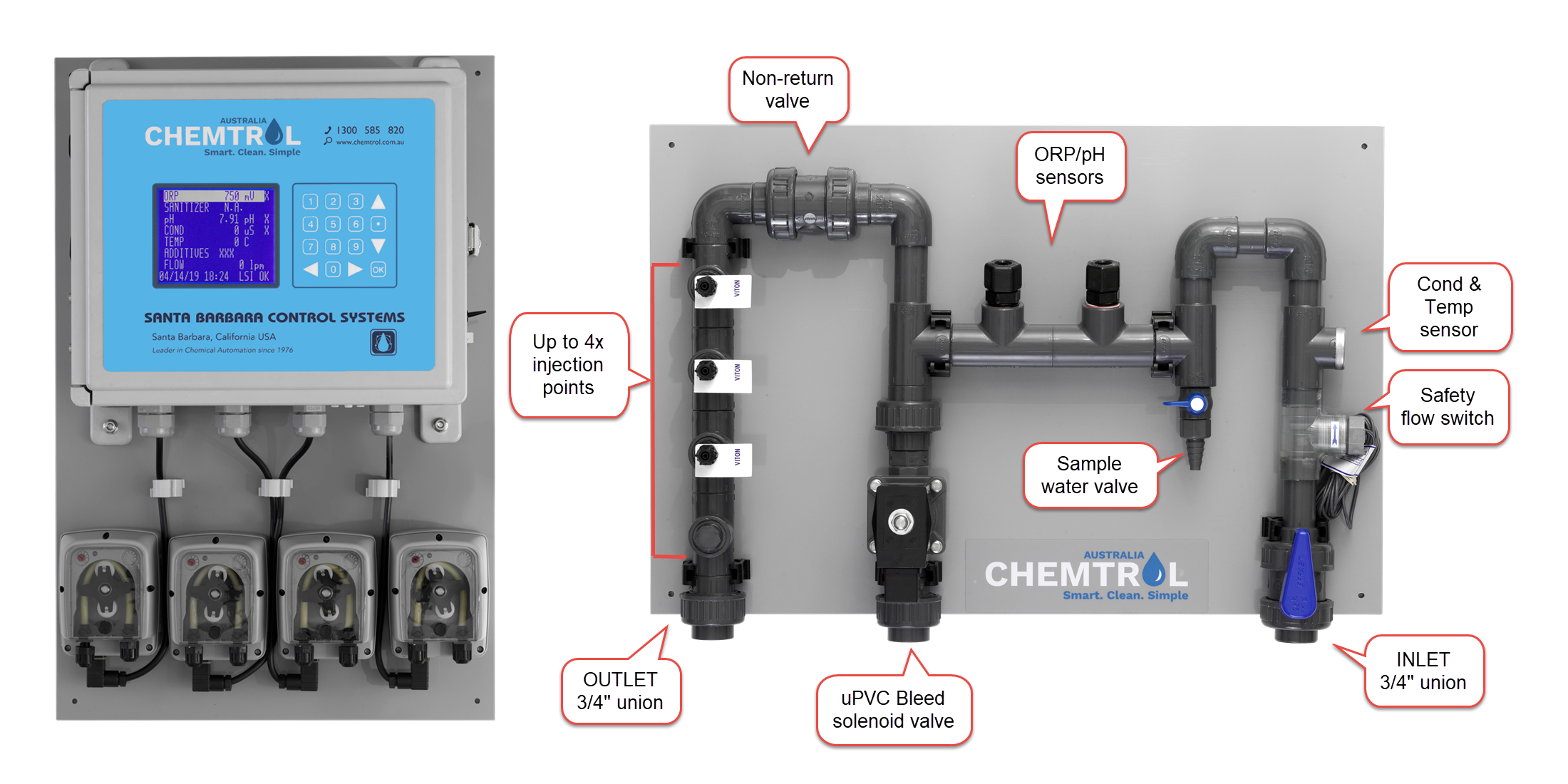
The CT110 is straightforward to install, as the drawings below show. Every controller comes with a detailed installation and operation manual.
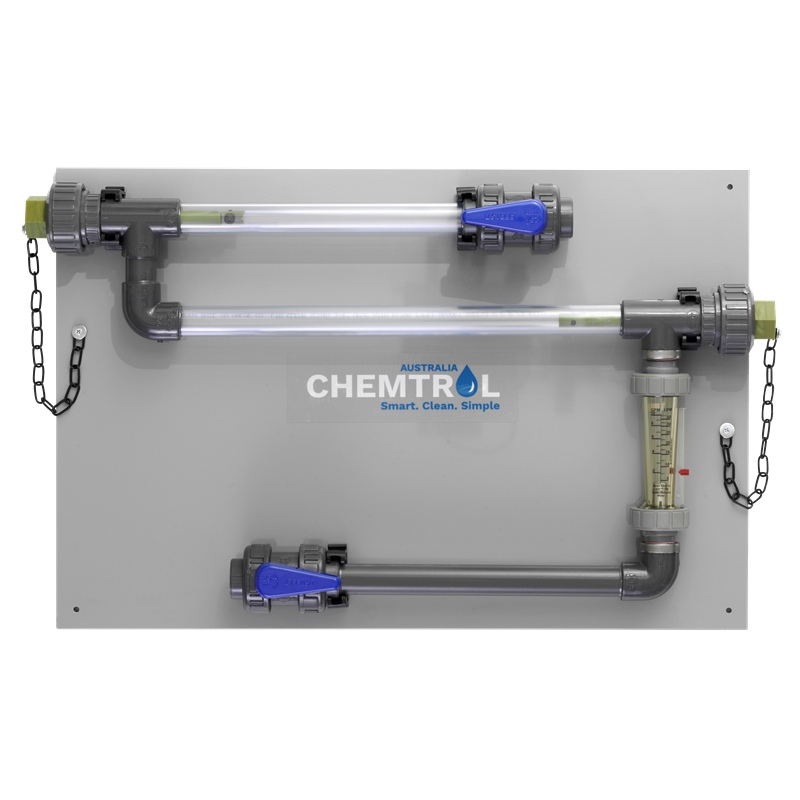
For a true water sample and reliable sensor readings, install it with a bypass line assembly manifold.

CT110 Operation
Everything is set from the front panel. The screen and keypad give direct access to every menu and sub-menu: sensor calibration, set points, alarm levels and the feed programs.
For cooling towers, boilers and industrial water
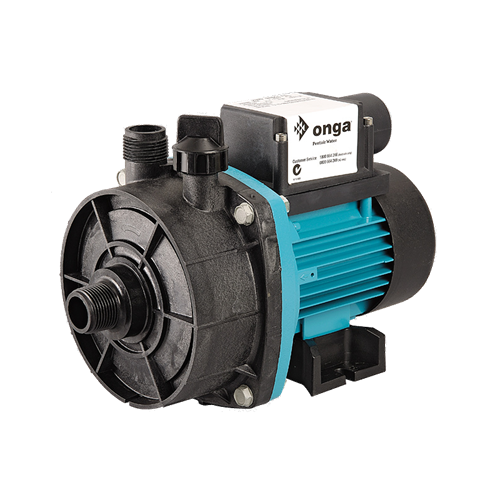
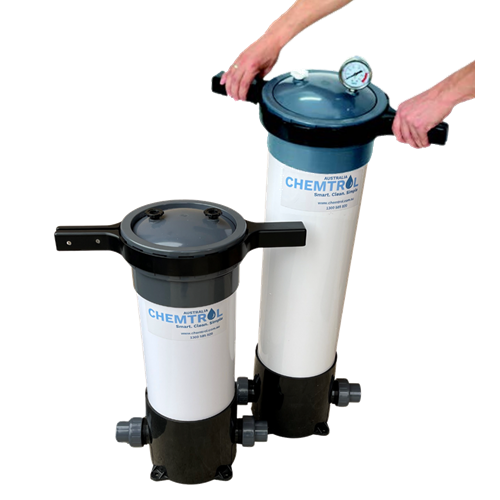
The CT110 suits cooling towers, boilers and industrial water systems, works with a wide range of chemical feed equipment, and runs on its own or as part of an existing water management set-up.
Remote Monitoring & Control
Every CHEMTROL® programmable controller can be monitored and controlled remotely, 24/7. Log in to our web-server from any browser to see the controller’s own display, or use the CHEMTROL app for Android and Apple.
 Change settings in real time, check status reports and trend graphs, and download all your data whenever you need it – for one site or many. See remote monitoring and control.
Alerts that reach the right people
Because the controller is online, its alerts go out by SMS, email or both – to operators, to anyone else who needs them, and to your water treatment technician, so problems are seen and fixed early.
A dedicated alarm relay can also signal any building management system (BMS) or PLC directly.
Connecting the controller
Most sites connect through a 4G or 5G router with a SIM card – we normally work with Telstra, one of Australia’s largest networks. A wired Ethernet cable or Wi-Fi works too. Find out more: web-access options.